
History
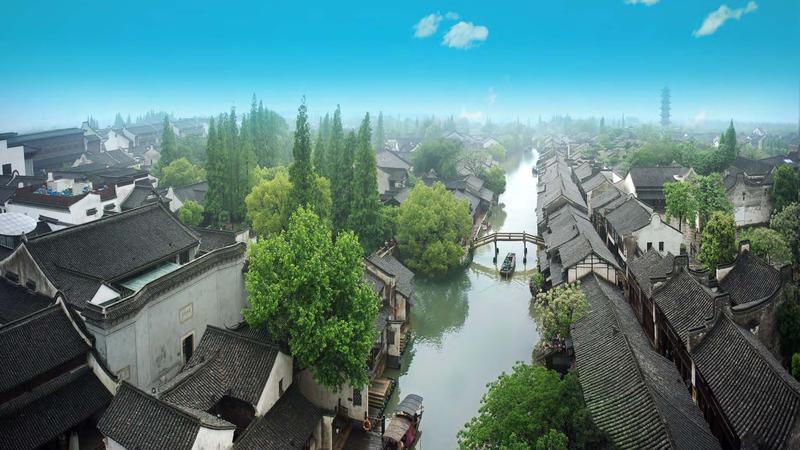
With more than 1,300 years of recorded history, Wuzhen has long been shaped by the waterways of the Beijing–Hangzhou Grand Canal. The town rose as a trading hub for rice, silk, and handicrafts, and its river arteries supported a dense network of workshops, warehouses, and guild halls. Generations of residents preserved the spatial pattern of narrow lanes, stone bridges, and timber houses that still define the classic “Jiangnan water town” image.
Wuzhen’s architecture reflects the prosperity of the Ming and Qing eras, when riverside dwellings and storefronts were built to accommodate commerce and family life. The town’s wooden beams, whitewashed walls, and black-tiled roofs are characteristic of southern Chinese vernacular style, while the canal system continues to guide daily movement and neighborhood structure. Traditional crafts, including indigo dyeing, wood carving, and local opera, anchor the cultural identity of the town.
The broader Grand Canal corridor was inscribed as a UNESCO World Heritage Site in 2014, reinforcing Wuzhen’s importance in China’s long-distance trading history. Wuzhen itself was recognized as one of China’s Ten Historical and Cultural Towns and placed on the UNESCO Preparatory World Culture Heritage list in 2001, a milestone that elevated preservation standards and public awareness.
Development
Beginning in 1999, Wuzhen launched a comprehensive protection and development effort that came to be known as the “Wuzhen Model.” The approach combined restoration of historic buildings with adaptive reuse, public realm upgrades, and careful visitor management. Rather than a single-phase redevelopment, Wuzhen’s transformation was staged to protect authenticity while enabling economic sustainability.
The East Gate Scenic Zone (Dongzha) opened in 2001 and retains a stronger emphasis on traditional life and small-scale craft practice. The West Gate Scenic Zone (Xizha), opened in 2006, introduced a more immersive resort experience, including boutique lodging, curated dining, and night-time canal views. Together, the twin zones illustrate two complementary strategies: cultural preservation and high-quality leisure services. In 2010, Wuzhen was awarded China’s prestigious 5A National Tourist Attraction designation.
Since 2014, Wuzhen has hosted the World Internet Conference, anchoring a new identity as a place where heritage and digital innovation meet. Cultural infrastructure has expanded as well, with the Wuzhen Grand Theatre (2013) becoming home to the internationally recognized Wuzhen Theatre Festival and the Muxin Art Museum (2015) presenting exhibitions that connect local context with modern art. The destination now balances heritage conservation, cultural production, and a robust year-round tourism economy.
Main attractions
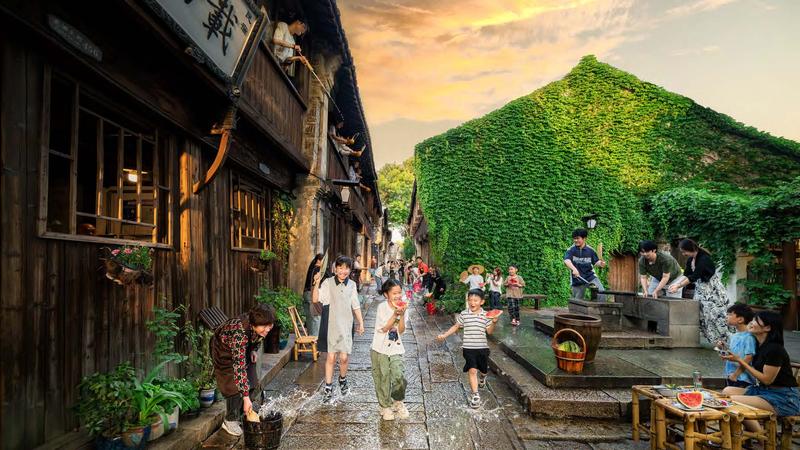
Dongzha (East Gate Scenic Zone) - A living portrait of traditional water-town life, Dongzha showcases canalside houses, original stone bridges, and community streets lined with workshops. Visitors encounter hands-on demonstrations of indigo dyeing, woodblock printing, and other crafts, alongside small museums and family-run eateries.
Xizha (West Gate Scenic Zone) - Known for its carefully restored architectural fabric and atmospheric nightscape, Xizha emphasizes premium cultural tourism. Riverside inns, specialty restaurants, and curated performances create a slow-travel experience, while restored warehouses and heritage buildings have been adapted into galleries and public spaces.
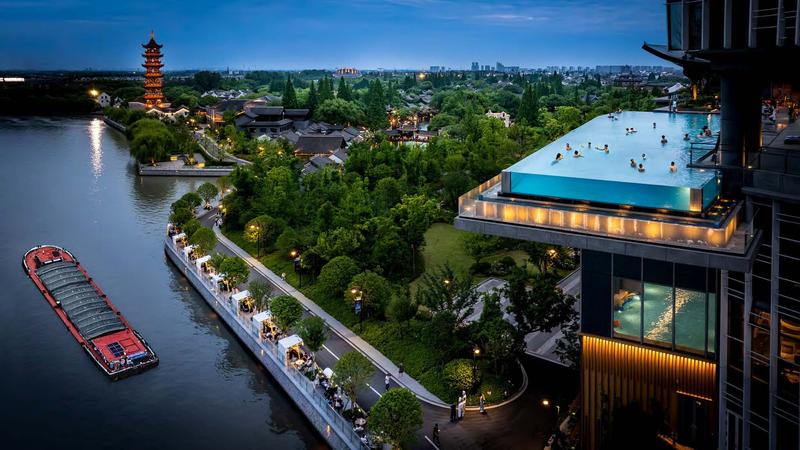
World Internet Conference Centre - A contemporary conference complex that connects the historic district with the canal landscape. It symbolizes Wuzhen’s modern transformation and hosts global forums that draw technology leaders and policy makers, adding a future-facing layer to the town’s identity.
Cultural Venues - The Wuzhen Grand Theatre is the anchor for the annual Wuzhen Theatre Festival, which brings international productions and experimental performances to the town. The Muxin Art Museum, dedicated to the artist and writer Mu Xin, is both a landmark of modern architecture and a platform for high-profile exhibitions.